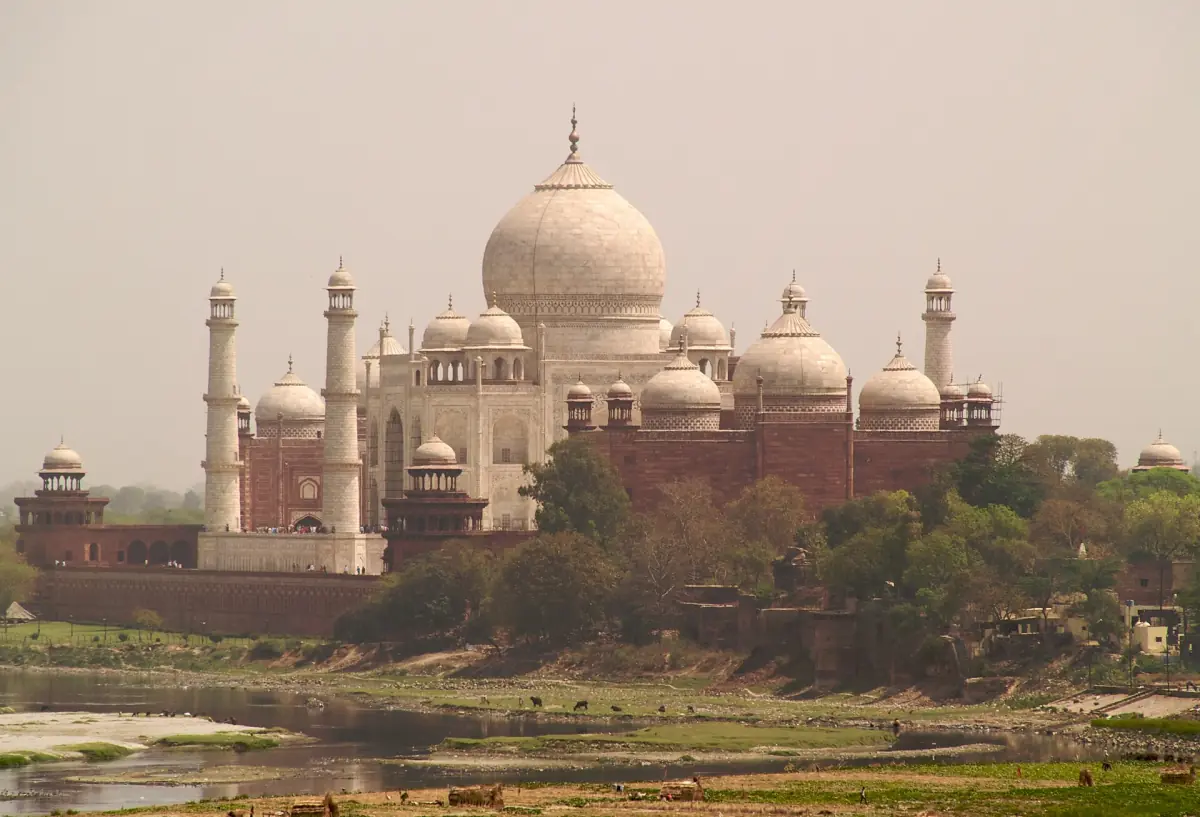
Agra weather and the best time to visit
Agra has a hot, dry spring, a monsoon in the middle of the year and a mild winter. For the Agra Fort the usual advice is the cooler months from October to March. Some travellers prefer February to April or September to November. The table below shows how much the weather changes between them.
The fort is open every day from sunrise to sunset, about 6 a.m. to 6 p.m., including Fridays. The Taj Mahal is closed to day visitors on Fridays, so check your dates before you buy Agra Fort tickets and plan the rest of the trip.
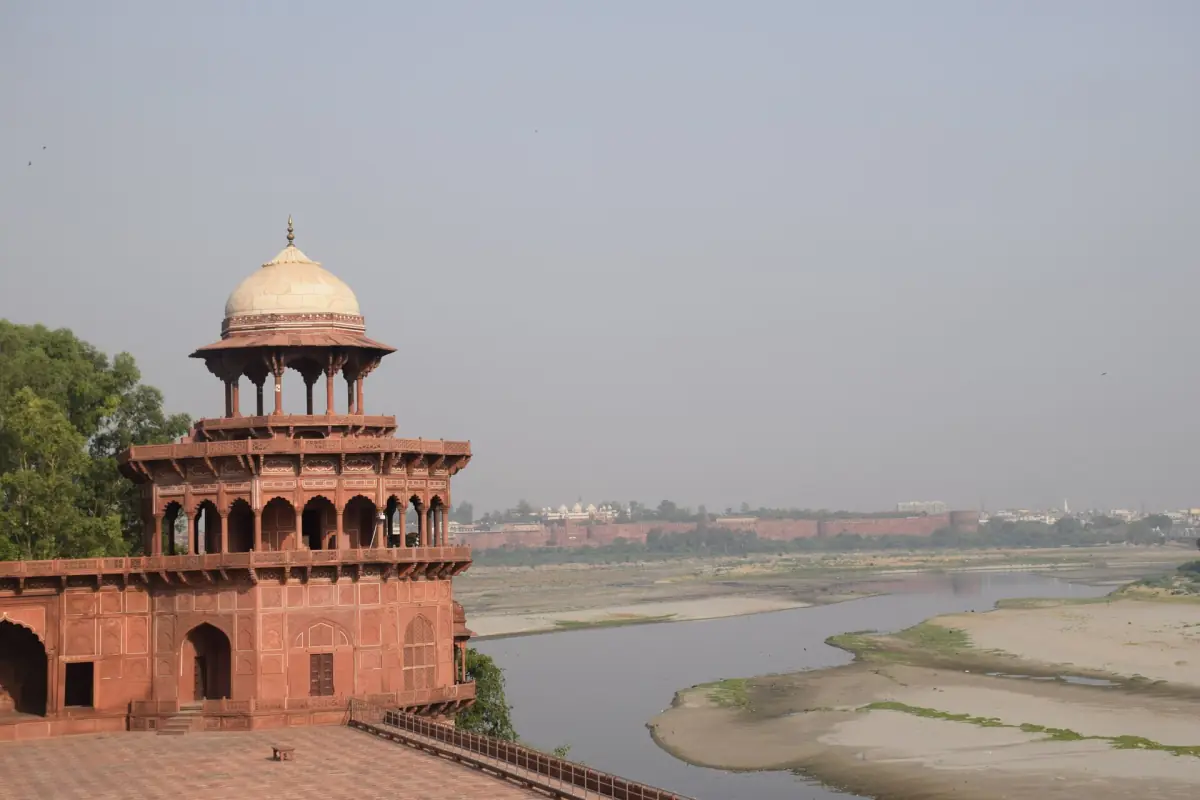
Agra weather by month
Long-term averages measured from 1981 to 2002. Highs and lows are the average of daily readings, rain is the average monthly total. They show the pattern, not a forecast for your dates.
| Month | Average high (°C) | Average low (°C) | Rain (mm) |
|---|---|---|---|
| January | 22.7 | 7.5 | 12.4 |
| February | 26.0 | 9.9 | 12.1 |
| March | 32.1 | 14.4 | 8.8 |
| April | 38.1 | 20.0 | 12.3 |
| May | 41.9 | 24.6 | 22.6 |
| June | 41.5 | 26.3 | 81.7 |
| July | 36.0 | 25.0 | 214.9 |
| August | 33.7 | 23.8 | 230.2 |
| September | 34.5 | 22.8 | 129.6 |
| October | 34.5 | 18.0 | 29.4 |
| November | 29.7 | 12.4 | 3.4 |
| December | 24.5 | 7.8 | 3.5 |
For most visitors, November to March suits long days outdoors best, with average highs between 22.7 and 32.1 °C and little rain. October and the end of March sit at the edges of that window.
Our pick: sunrise and the fort in one morning
In the hot months the fort works best at opening time, and this half day starts at sunrise with the Taj Mahal and then moves on to the fort.
Hand-picked tours, booked through GetYourGuide. Prices are indicative starting prices in US dollars (as of October 2026). Tap a tour for live availability and the current price in your currency.
Agra tours for every season
Guided visits and day trips in Agra, with live prices and availability.
What each season means for your visit
Read the months as a pattern and adjust your day.
Winter, December to February
Days are mild, with highs of 22.7 to 26.0 °C. Nights are cool, with lows near 7.5 to 9.9 °C, so bring a warm layer for sunrise at the fort. This is also the season for fog and haze, explained below.
Spring, March and April
Highs climb from 32.1 to 38.1 °C and rain is low. Start at sunrise, when the fort opens, and leave the hottest hours for shade.
Hot season, May and June
Average highs pass 41 °C. A fort visit works best at opening time. Allow breaks, carry water and keep your plans short.
Monsoon, July to September
July and August bring about 215 and 230 mm on average, and September still brings about 130 mm. Courtyards and open terraces can be wet, so plan flexibly.
Autumn, October and November
Rain drops to about 29 mm in October and 3 mm in November. Highs fall from 34.5 to 29.7 °C. Inside the fort you can spend a morning in the courtyards and palaces.
Moonlit nights
The Taj Mahal night viewing needs a clear sky. It runs on full-moon nights and the two nights before and after, and not on Fridays or in Ramadan.
Winter fog and smog
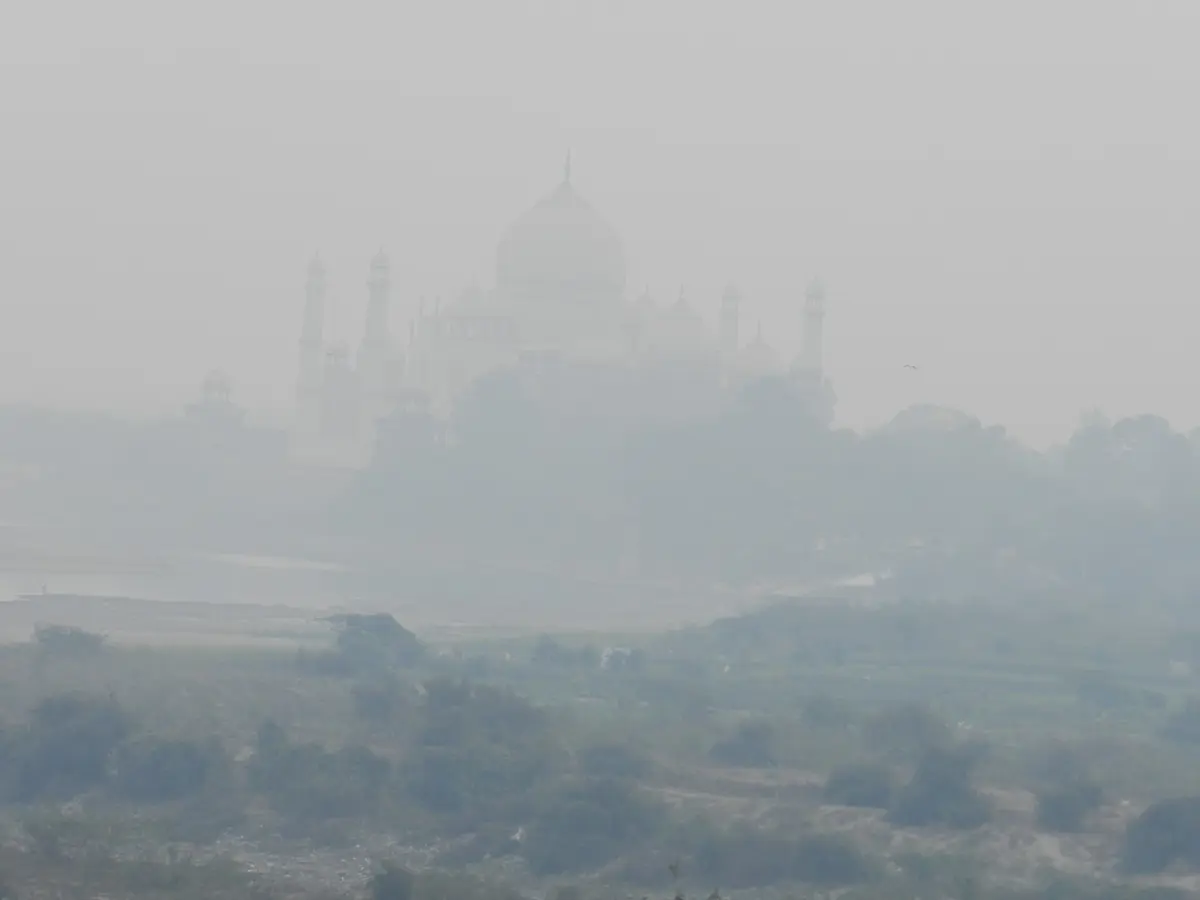
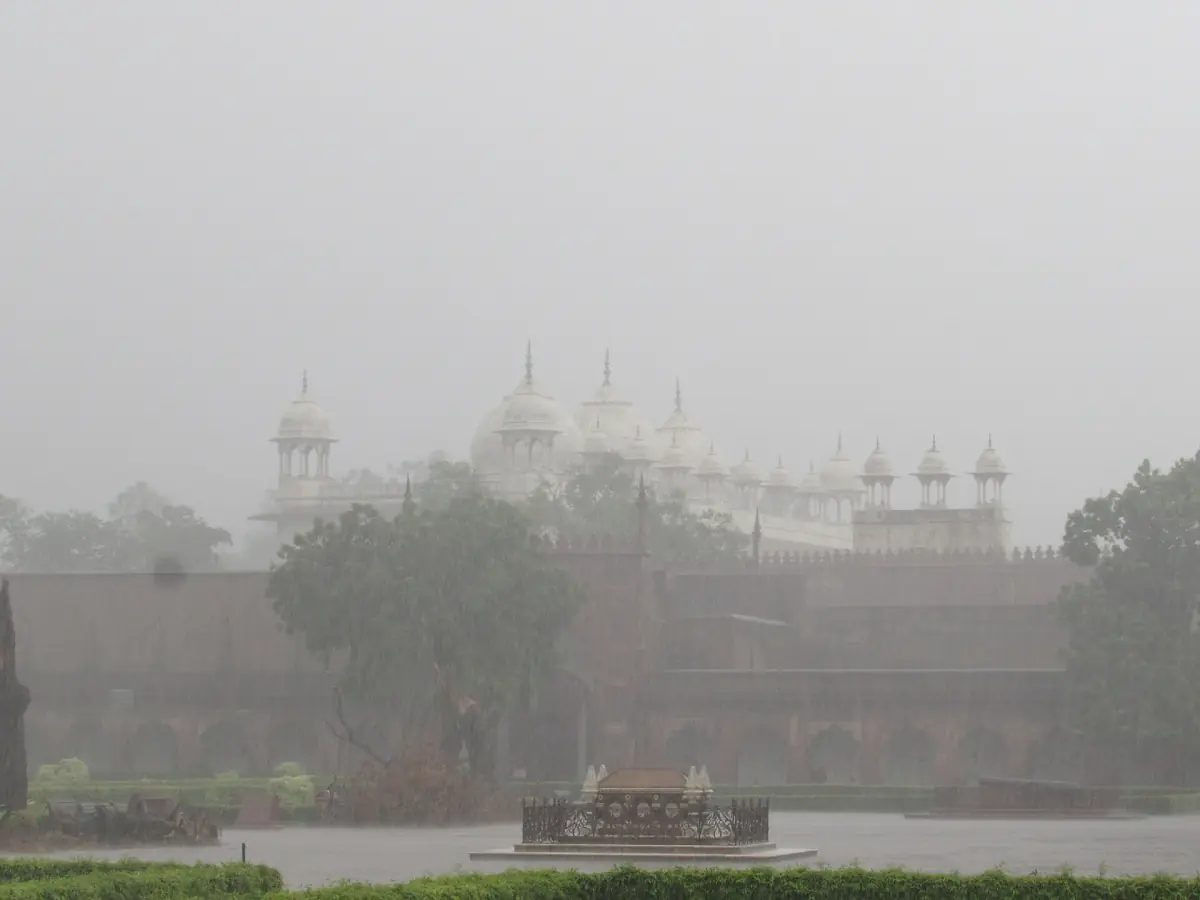
On some winter mornings a thick fog lies over the Yamuna, and the Taj Mahal can disappear from the view at the fort. Winter also brings higher air pollution to Indian cities, which can add haze. Fog and haze are a known risk in the cool season, but they are no reason to skip a visit.
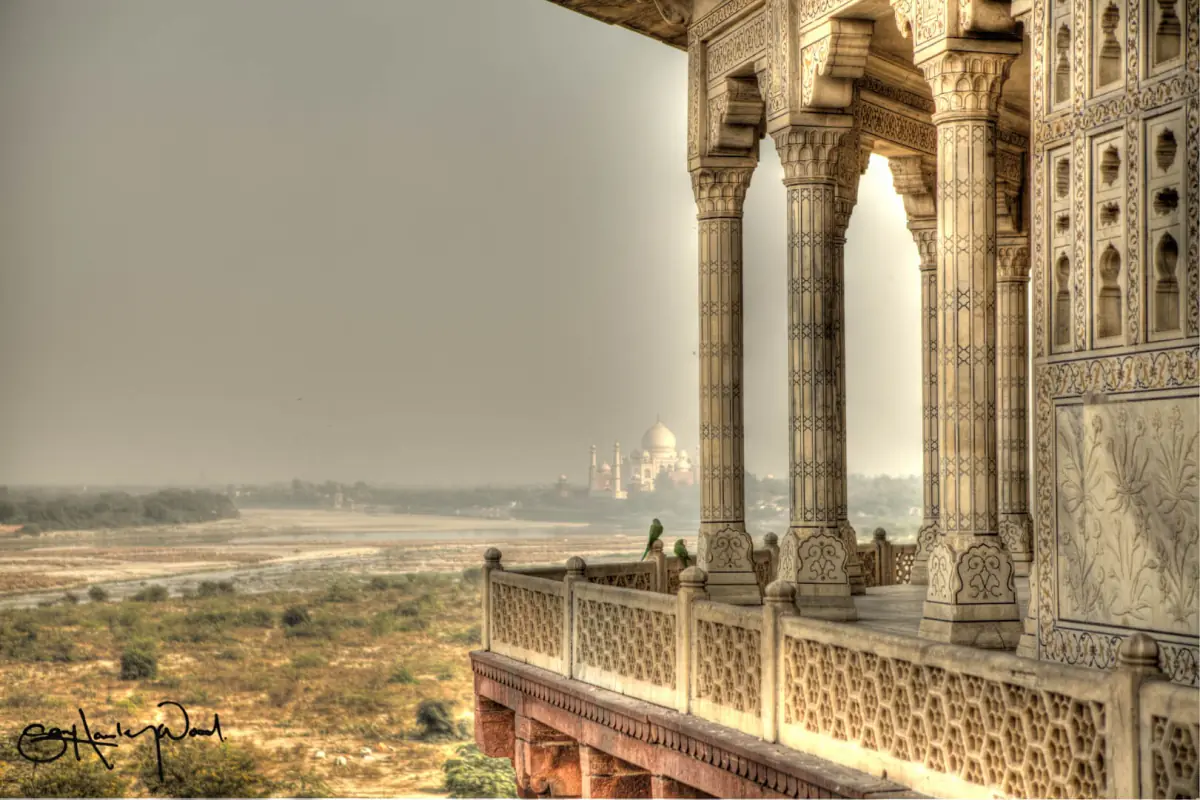
You cannot count on a clear view at sunrise, so plan with a buffer. Keep a second morning free if your schedule allows, and treat the Taj view from the Musamman Burj as a bonus rather than the reason for the trip. The red sandstone walls, courtyards and marble palaces are worth seeing in haze, too.
Plan the rest of your trip
After you pick your season.
Agra weather: frequently asked questions
What is the best time to visit Agra?
The cooler months from October to March are the usual choice. November to February have the lowest highs and very little rain, though they also bring fog and haze. February to April and September to November are other windows that some travellers prefer.
What is the hottest month in Agra?
May, with an average high of 41.9 °C, followed closely by June at 41.5 °C. Visit the fort at opening time in these months.
When does it rain in Agra?
Mostly from July to September. August averages 230 mm, July 215 mm and September 130 mm. From November to May, monthly rain stays below 25 mm.
Can I see the Taj Mahal from the Agra Fort in winter?
Often, but not always. Fog and haze can hide it, especially early in the morning. The view cannot be guaranteed, so allow a spare day if you can.
Are these numbers a forecast?
No. They are long-term averages from 1981 to 2002. Use them to choose a season and check a local forecast before your visit.