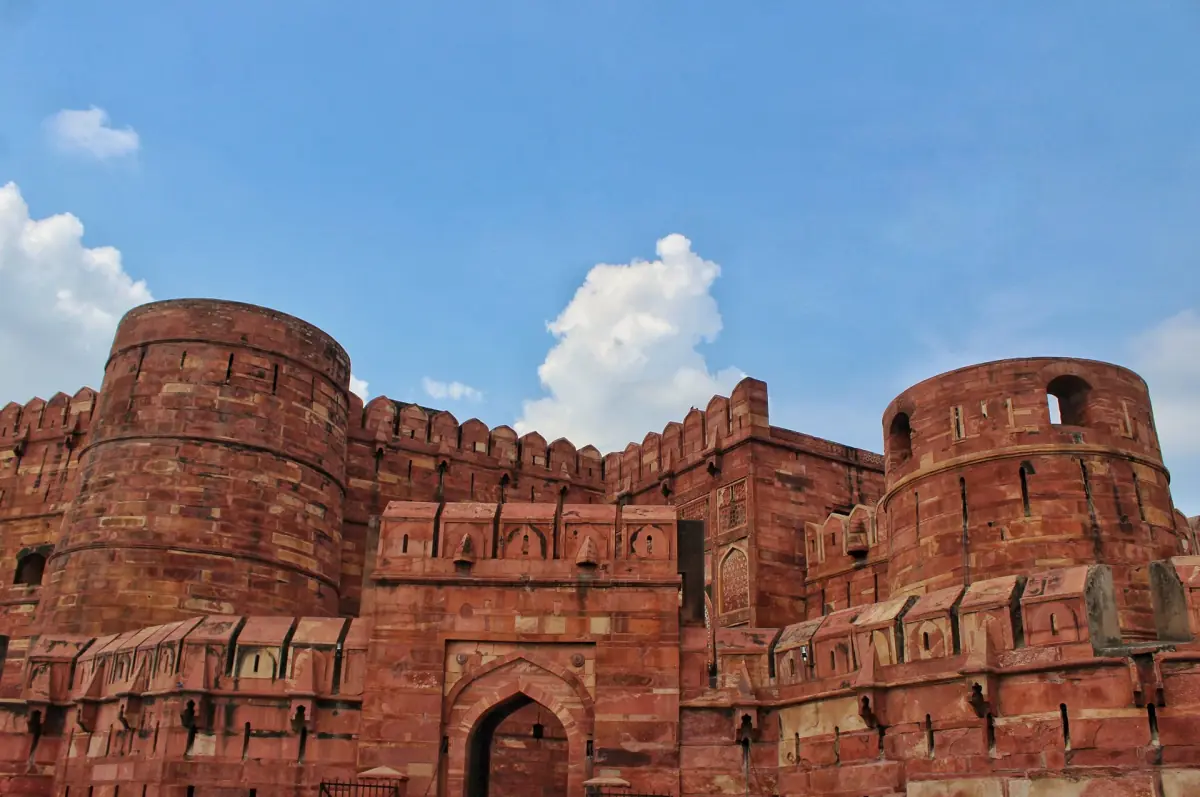
Agra Fort facts at a glance
Agra Fort stands in Agra, Uttar Pradesh, on the Yamuna. UNESCO lists it as a World Heritage Site since 1983 under criterion (iii) and describes it as an imperial city inside a sandstone fortress. The enclosing walls are 2.5 km long, built of red sandstone. The fort has a semicircular plan, walls 21.4 m high, 4 gates and covers about 94 acres, which is roughly 38 hectares.
The fort is also called Lal Qila, Fort Rouge and Qila-i-Akbari. Its red walls are why it is often called the Red Fort of Agra. If you are planning a visit, start with the Agra Fort tickets page.
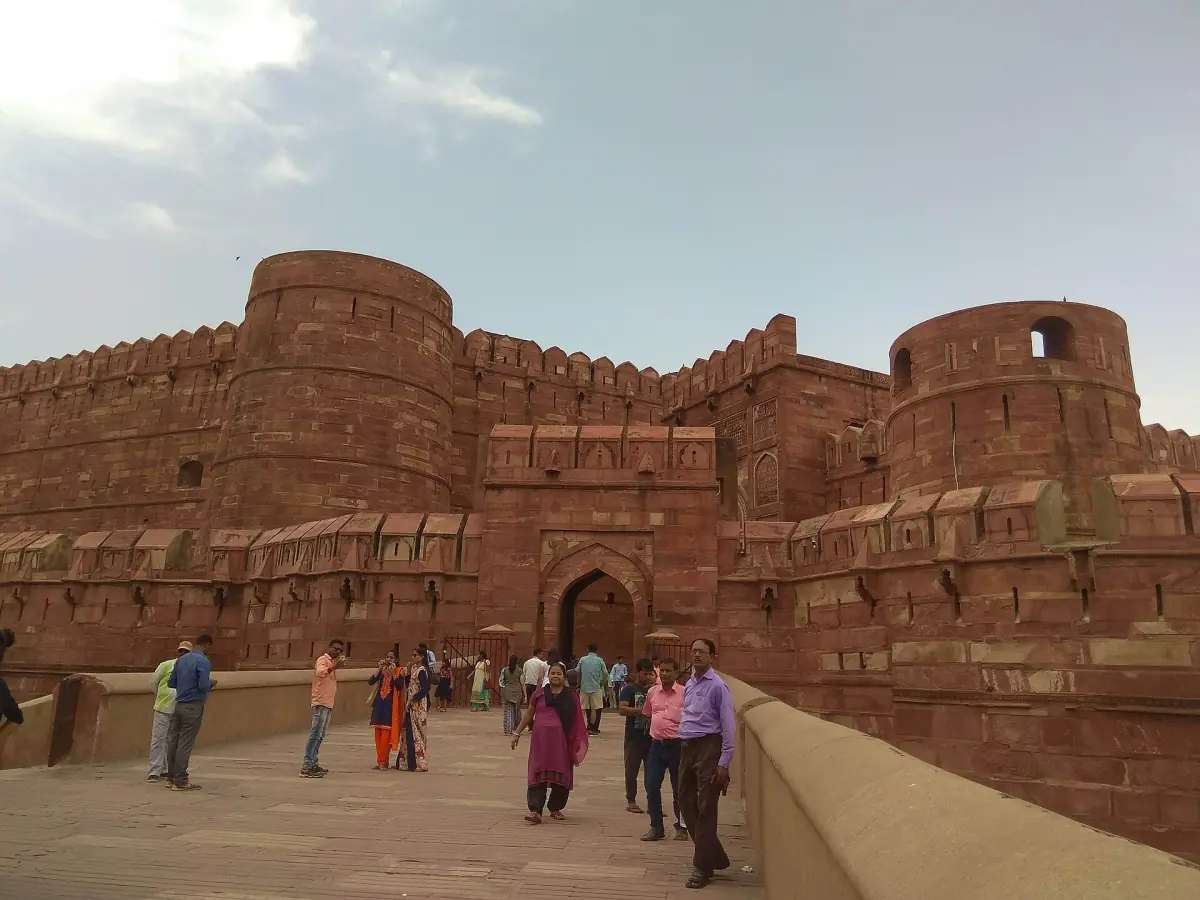
Agra Fort in numbers
Size and key dates in one table.
| Fact | Agra Fort |
|---|---|
| Location | Agra, Uttar Pradesh, on the Yamuna |
| Material | Red sandstone |
| Enclosing walls | 2.5 km long, 21.4 m high |
| Plan | Semicircular |
| Gates | 4 |
| Area | About 94 acres (about 38 ha) |
| Akbar's building phase | 1565–1573 |
| UNESCO World Heritage | 1983, dossier 251, criterion (iii) |
| Distance to the Taj Mahal | About 2.5 km |
| Visitor entrance | Amar Singh Gate |
The end of Akbar's work is also put at 1574 instead of 1573. The 38 hectares are converted from the 94 acres. They describe the whole fort, not the area open to visitors.
Our pick: a fort tour with skip-the-line entry
Two hours with a guide who can answer questions about the fort, and an entry that skips the ticket line.
Hand-picked tours, booked through GetYourGuide. Prices are indicative starting prices in US dollars (as of October 2026). Tap a tour for live availability and the current price in your currency.
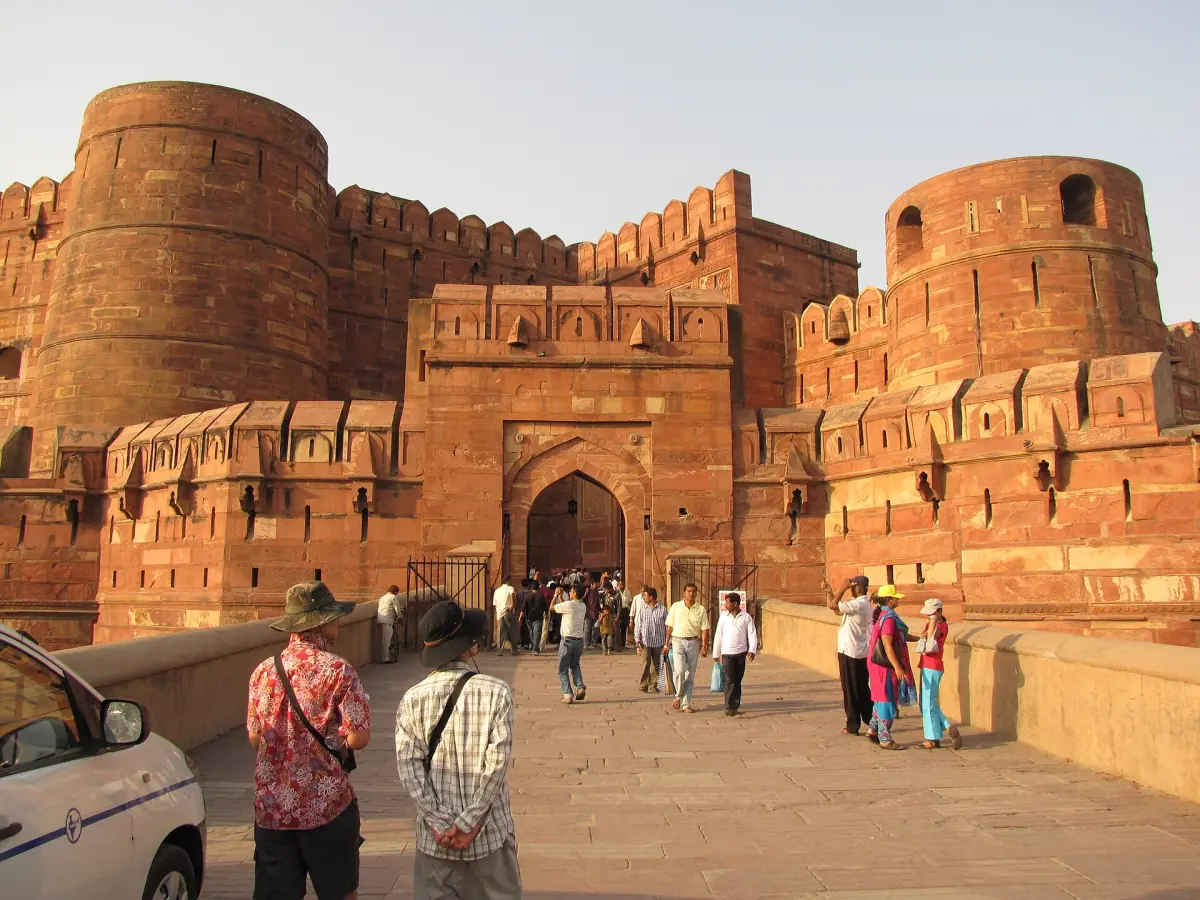
Agra Fort tours
Guided visits to the fort and the Taj Mahal, sunrise tours and day trips from Delhi, with live prices and availability. Check whether the entry ticket is included before you book.
Size, walls and material
The fort is built of red sandstone, which gives the walls their colour. The enclosing walls run 2.5 km around a semicircular plan and rise 21.4 m. The grounds cover about 94 acres. From the outside you see mostly the walls, the round bastions and the gate towers. The palaces, halls and mosques stand inside.
The military part of the fort is closed to the public. That is one reason why the area you can walk through is smaller than the figure for the whole fort.
The gates of Agra Fort
The fort has 4 gates. The Delhi Gate, the Akbari Gate and the Khizri Gate, a water gate on the river side, are among them. The Delhi Gate is the best known from the outside. Visitors, however, enter through only one gate: the Amar Singh Gate.
Do not plan on walking in through the Delhi Gate or any other historical gate. A gate that appears in the history books is not necessarily an open entrance today.
Who built what, and when
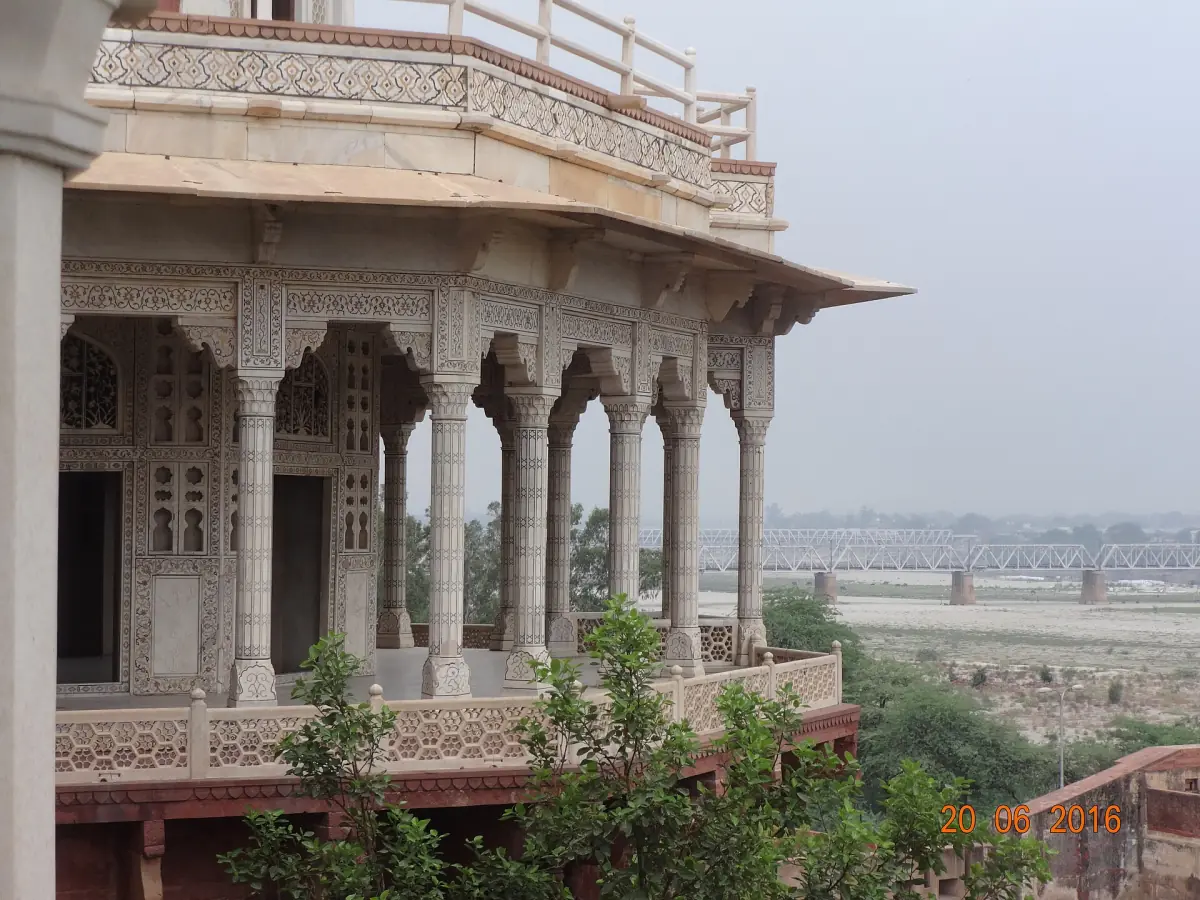
A fort named Badalgarh stood on the site before Akbar. Akbar rebuilt it in red sandstone between 1565 and 1573. Jahangir stayed in the fort repeatedly, and the Jahangiri Mahal is attributed to Akbar despite its name. Shah Jahan added white marble palaces and mosques. The Diwan-i-Am, the hall of public audience, is linked to Shah Jahan and the year 1628.
Aurangzeb held his father Shah Jahan in the fort until his death in 1666, a confinement of 8 years. In the 18th century the Jats and the Marathas controlled the fort, and the British took it from the Marathas in 1803. The British later pulled down many older buildings to make room for barracks. The full story is on the history page.
UNESCO status and what it means for a visit
The listing covers the whole monument, not only the parts you can enter.
Listed in 1983
Agra Fort is UNESCO dossier 251, listed under criterion (iii). The listing year is not a building date.
Read the history →Not the Delhi fort
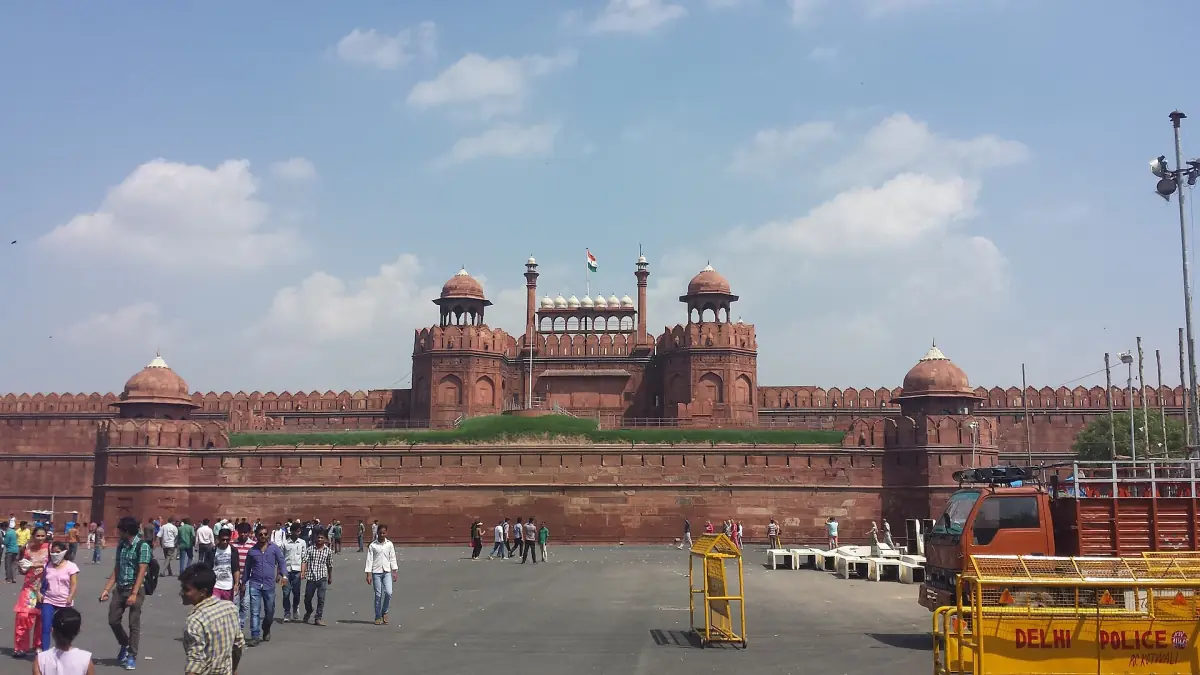
Delhi's Red Fort is a separate listing, the Red Fort Complex, from 2007. The two are different places with different tickets.
Compare the two forts →Open every day
The fort is open from sunrise to sunset, Fridays included, while the Taj Mahal is closed to tourists on Fridays.
Taj Mahal hours →Buildings inside
The Jahangiri Mahal, Khas Mahal, Diwan-i-Am and Diwan-i-Khas are the best known. Not every building is open to walk into.
What is inside →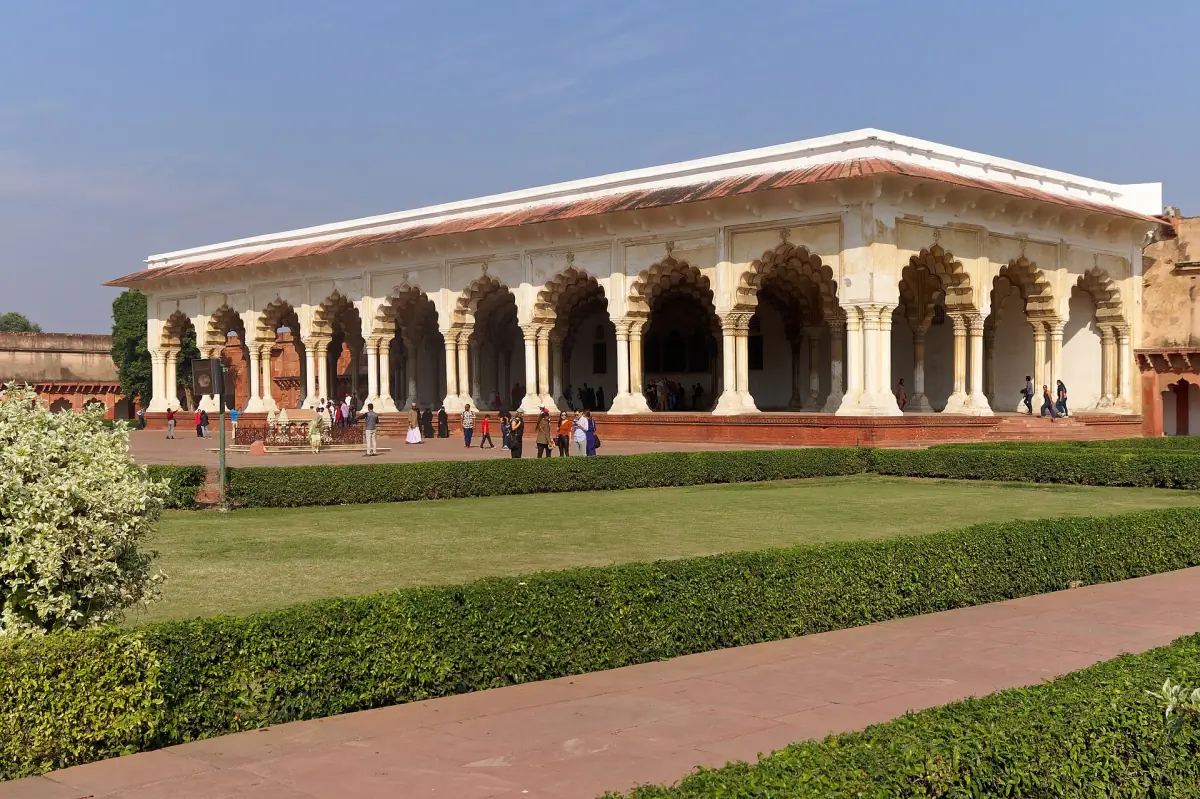
Agra Fort facts: frequently asked questions
How big is Agra Fort?
About 94 acres, which is roughly 38 hectares. The enclosing walls are 2.5 km long and 21.4 m high. Only part of the fort is open to visitors, as the military section is closed.
How many gates does Agra Fort have?
The fort has 4 gates. The Delhi Gate, the Akbari Gate and the Khizri Gate are among them. Visitors use the Amar Singh Gate only.
When was Agra Fort built?
Akbar rebuilt it in red sandstone from 1565 to 1573, on the site of an earlier fort called Badalgarh. The end of the work is sometimes put at 1574. Shah Jahan added marble palaces and mosques later.
Why is Agra Fort called the Red Fort?
Because of its red sandstone walls. Lal Qila means Red Fort. The same name is used for the fort in Delhi, so always name the city.
Is Agra Fort a UNESCO World Heritage Site?
Yes, since 1983. UNESCO describes it as an imperial city inside a sandstone fortress.
Is Agra Fort open on Fridays?
Yes, every day from sunrise to sunset. See the tickets page for fares and timings.