Agra Fort history at a glance
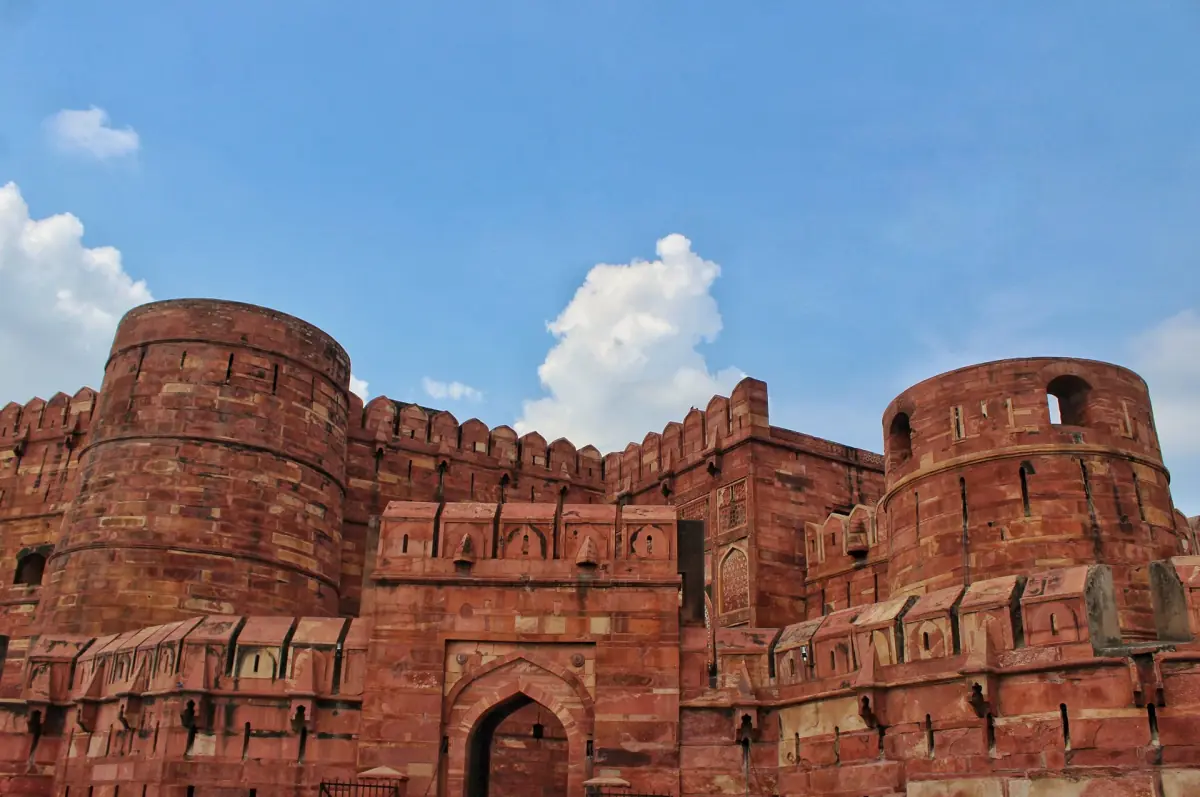
Agra Fort stands on the Yamuna in Agra, Uttar Pradesh. A fortress called Badalgarh occupied the site before the Mughals rebuilt it. Akbar replaced it with a red sandstone fort from 1565 to about 1573 or 1574. His son Jahangir stayed there often, his grandson Shah Jahan added white marble palaces and mosques, and Shah Jahan's son Aurangzeb held him in the fort until his death in 1666.
In the 1700s the Jats and the Marathas held the fort in turn. The British took it from the Marathas in 1803 and turned much of it into barracks. UNESCO listed the fort in 1983 as an imperial city inside a sandstone fortress. The fort is also known as Lal Qila, Fort Rouge and Qila-i-Akbari.
History is easier to follow with someone pointing at the walls. If you want a guide, compare the current Agra Fort tours before you arrive.
Akbar and the red sandstone fort
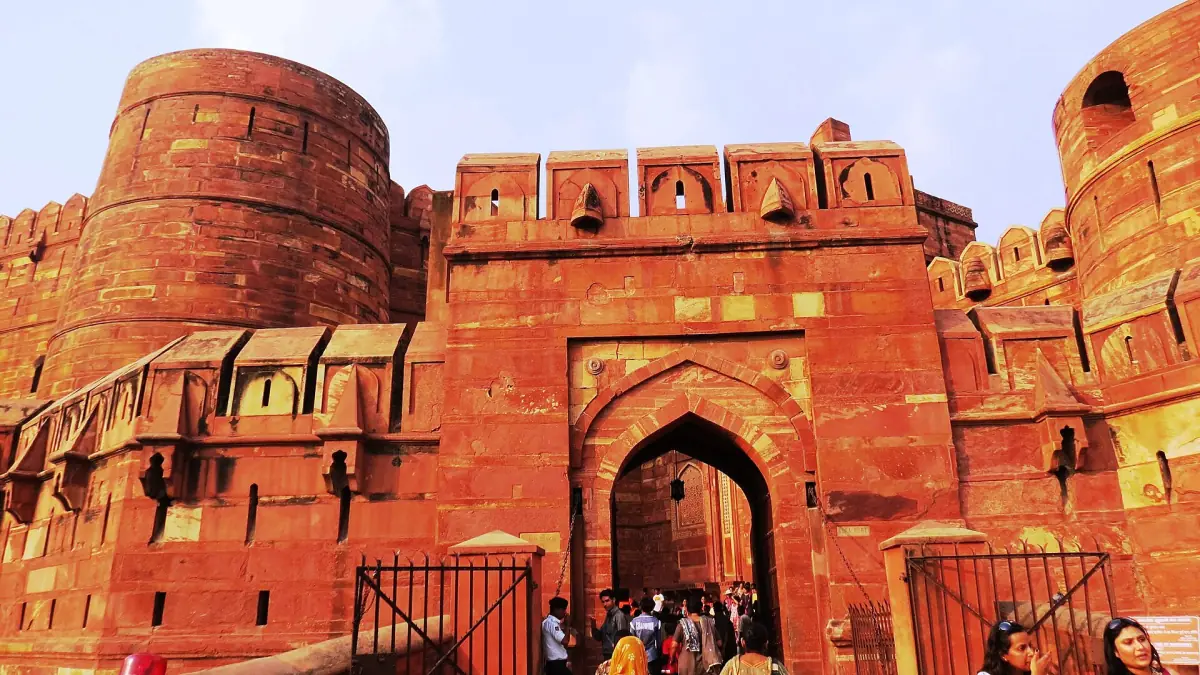
The outer shell you see from the road is his.
Akbar rebuilt the older stronghold in red sandstone, on a half-circle plan with high walls and four gates. The wall is 21.4 m high and about 2.5 km long, and the enclosure covers roughly 94 acres. More on these numbers is on the Agra Fort facts page.
The Jahangiri Mahal, a long red sandstone palace with domed pavilions, is attributed to Akbar despite its name. Jahangir stayed in the fort repeatedly during his reign. You can compare Akbar's red sandstone with the later marble buildings on the inside the fort page.
Our pick: a guided walk through the fort
One hour with a guide through the fort the UNESCO lists, a short way to put the history in context.
Hand-picked tours, booked through GetYourGuide. Prices are indicative starting prices in US dollars (as of October 2026). Tap a tour for live availability and the current price in your currency.
Agra Fort guided tours and Taj Mahal days
Guided visits to Agra Fort, combined Taj Mahal days and day trips from Delhi, with live prices and availability.
Shah Jahan and the marble palaces
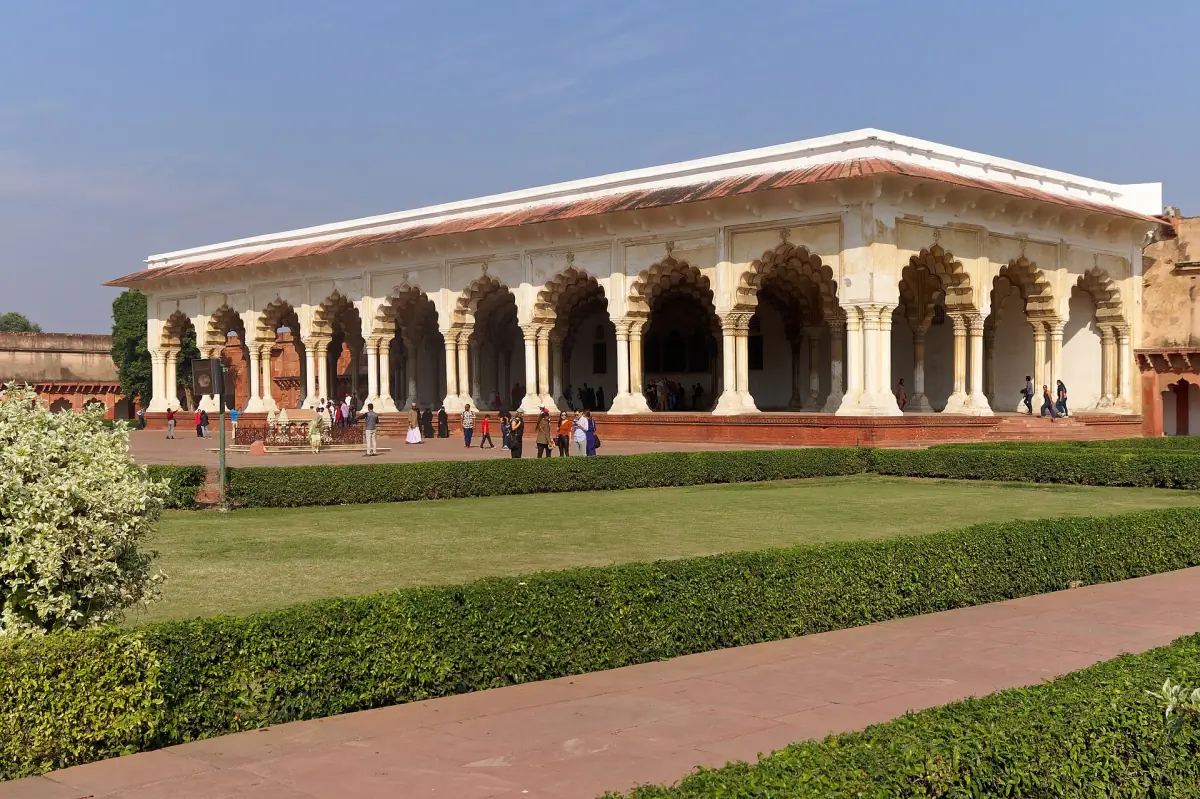
Shah Jahan changed the character of the fort. Where Akbar built in red sandstone, Shah Jahan added white marble palaces and mosques. The Diwan-i-Am, the hall of public audience, is credited to him and dated to 1628. The Diwan-i-Khas is the private audience hall. The Khas Mahal is a white marble palace, and the Moti Masjid is a marble mosque from his time.
Look for the change in material as you move through the fort: red sandstone for Akbar's work, white marble for Shah Jahan's.
Captivity and the Musamman Burj
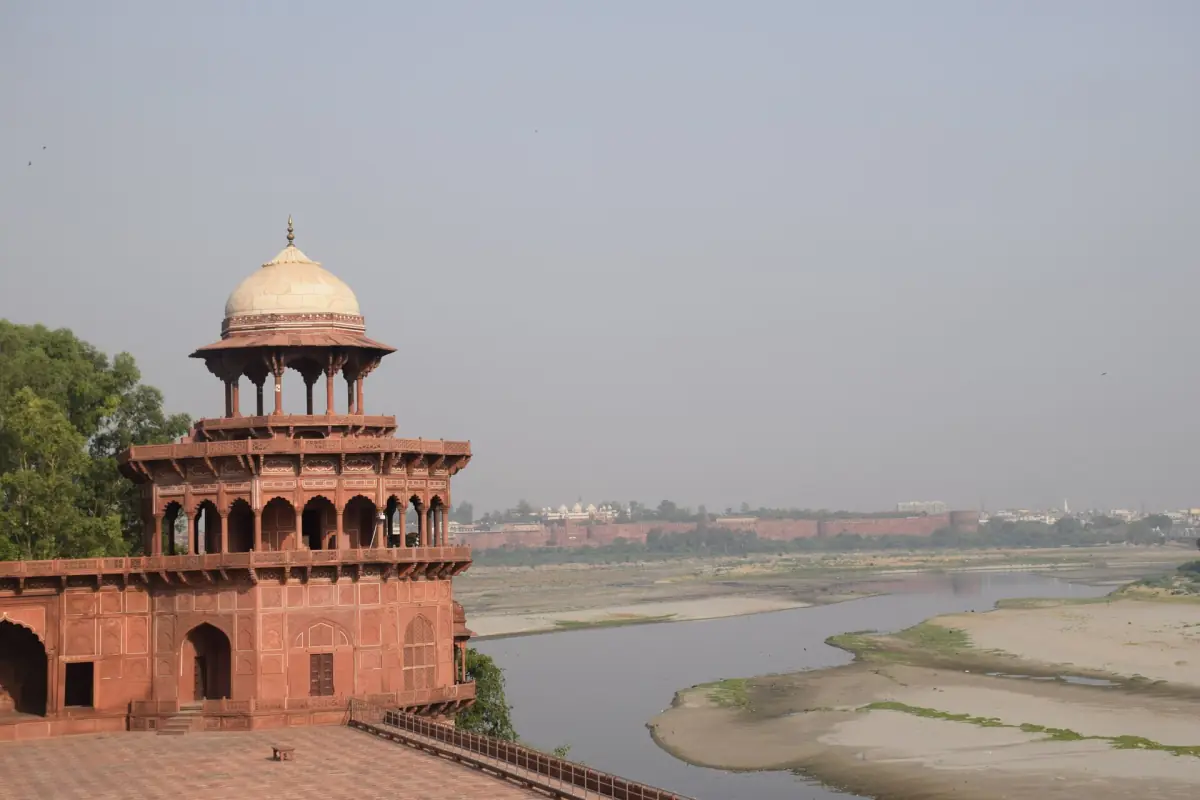
Aurangzeb, Shah Jahan's son, held his father in the fort until Shah Jahan died in 1666, about eight years later. The Musamman Burj is the pavilion tied to that captivity and to its view of the Taj Mahal. The Musamman Burj page covers the tower and the view in detail.
After the Mughals: Jats, Marathas and the British
In the 18th century the Jats and then the Marathas controlled the fort. The British took it from the Marathas in 1803.
Under British rule many of the older buildings were pulled down to make room for barracks. That is one reason why the fort does not look like a complete palace city today. A large part of the area is still in military use and closed to visitors.
During the uprising of 1857, British forces retreated into the fort, and by 3 July 1857 they were inside. Fighting flared again in October.
Agra Fort timeline
Who held the fort and what changed.
| Period | Who | What changed |
|---|---|---|
| Before 1565 | Earlier rulers | Badalgarh stronghold on the site |
| 1565 to 1573 or 1574 | Akbar | Red sandstone fort, walls and gates |
| Jahangir's reign | Jahangir | Repeated stays; Jahangiri Mahal attributed to Akbar |
| Shah Jahan's reign | Shah Jahan | White marble palaces and mosques; Diwan-i-Am dated 1628 |
| To 1666 | Aurangzeb and his father | Shah Jahan held in the fort until his death |
| 1700s | Jats and Marathas | Control passes between them |
| 1803 | British | Fort taken; many older buildings replaced by barracks |
| 1857 | British garrison | Retreat into the fort by 3 July; fighting again in October |
| 1983 | UNESCO | Listed as a World Heritage Site |
For most visitors the Akbar and Shah Jahan layers are enough to read the fort on a walk: the red sandstone walls and gates are Akbar's, the white marble pavilions are Shah Jahan's.
See the history on site
Pages that put the dates next to the buildings.
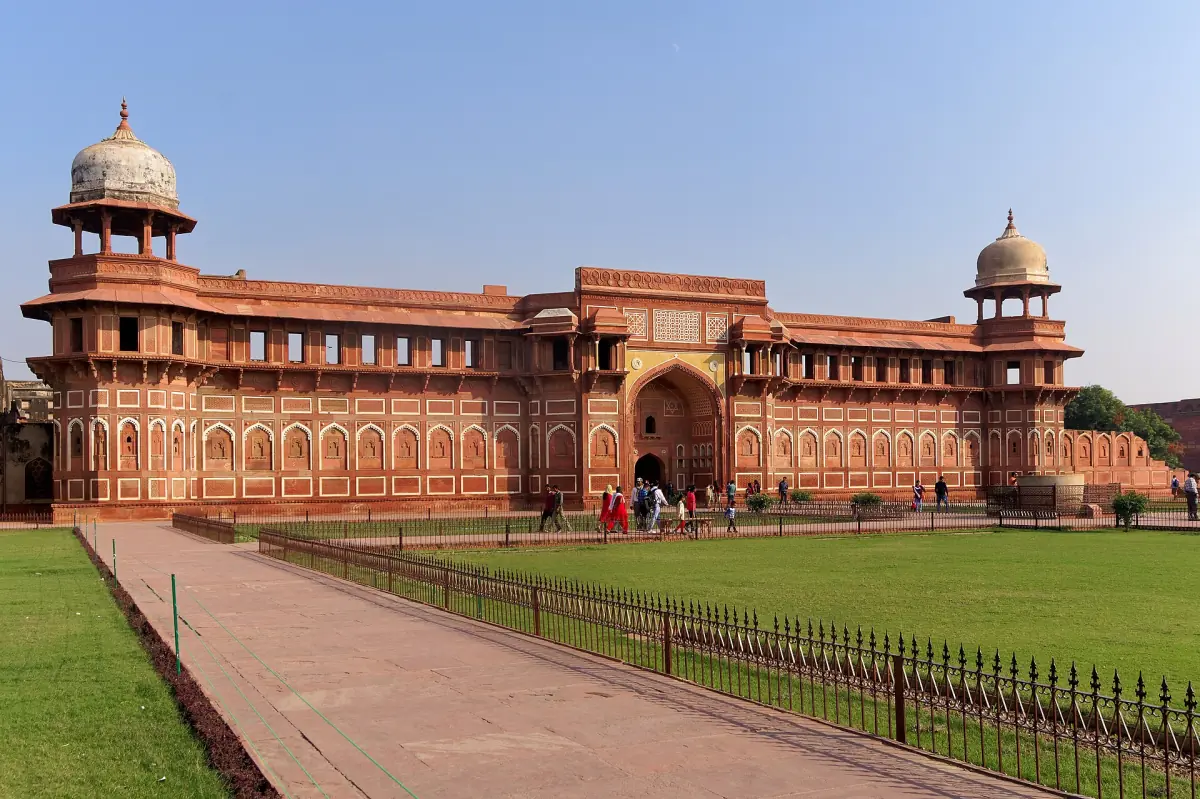
Inside Agra Fort
The Jahangiri Mahal, Diwan-i-Am, Diwan-i-Khas and Khas Mahal, and what you can enter.
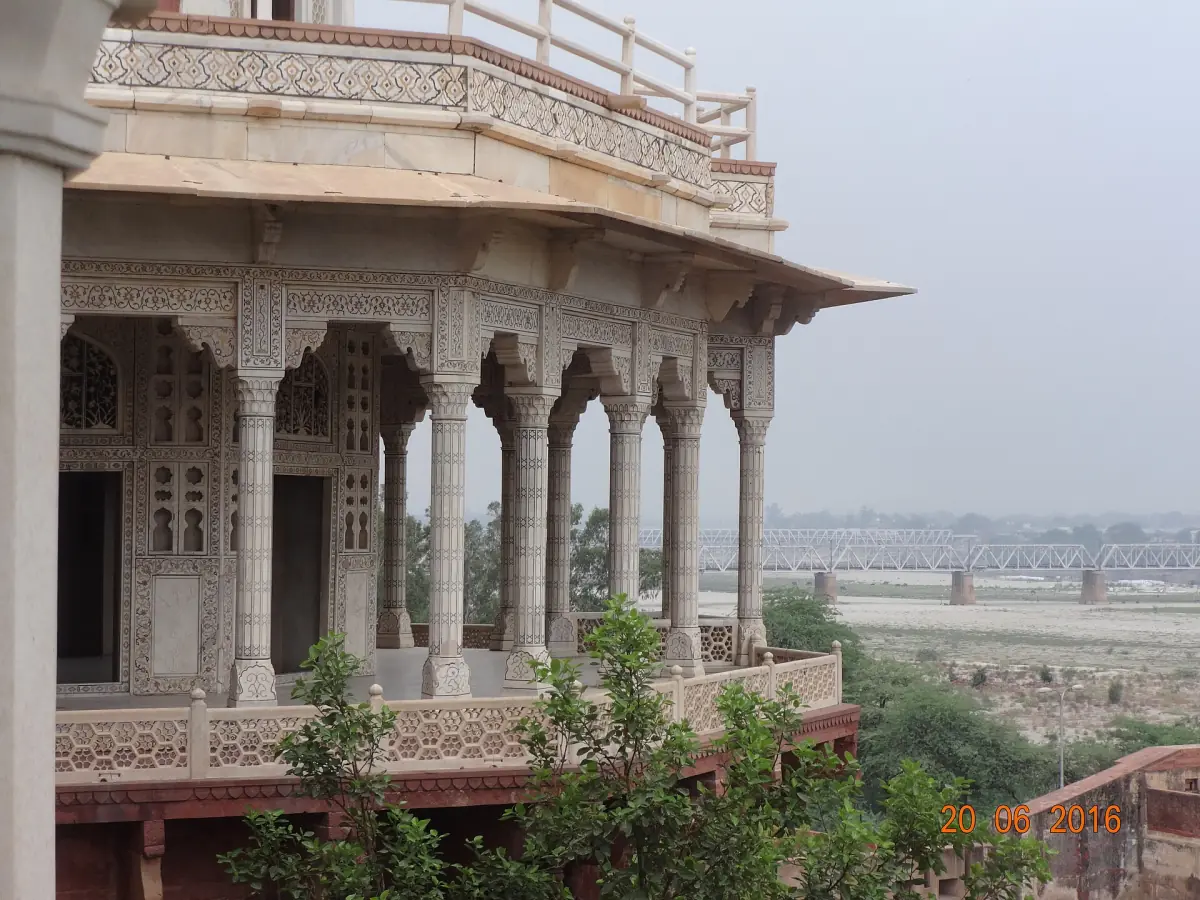
Musamman Burj
The marble tower linked to Shah Jahan's captivity and the Taj Mahal view.
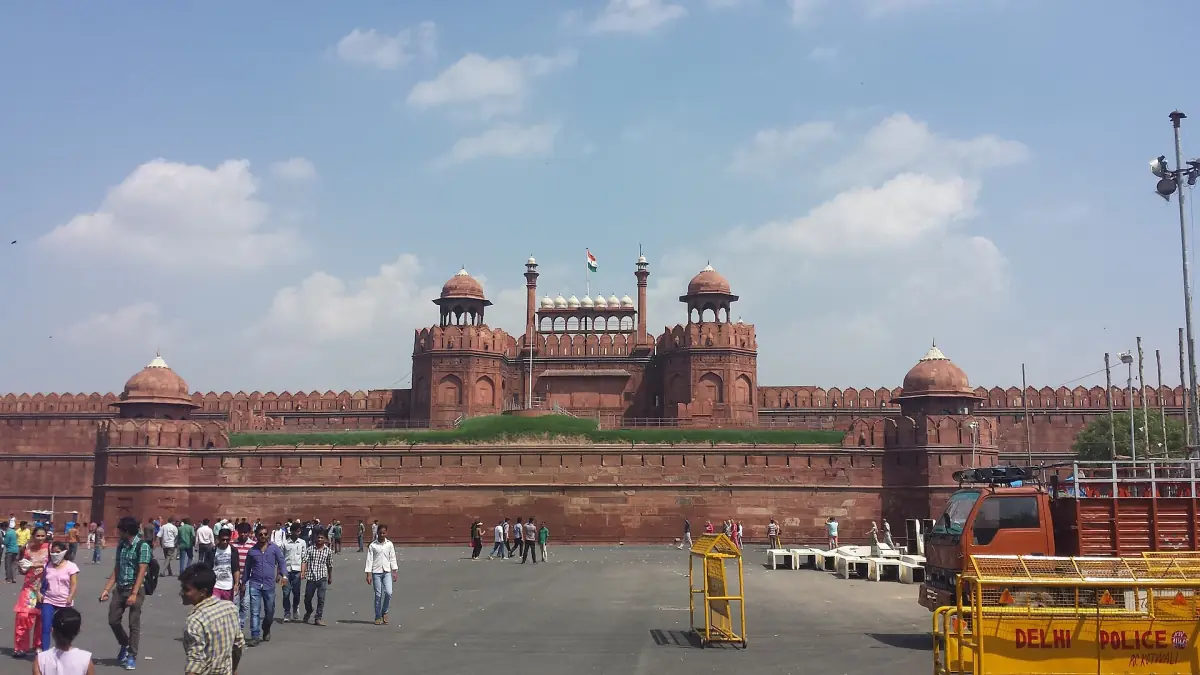
Red Fort Agra and Delhi
Two forts with similar names, built in different cities.
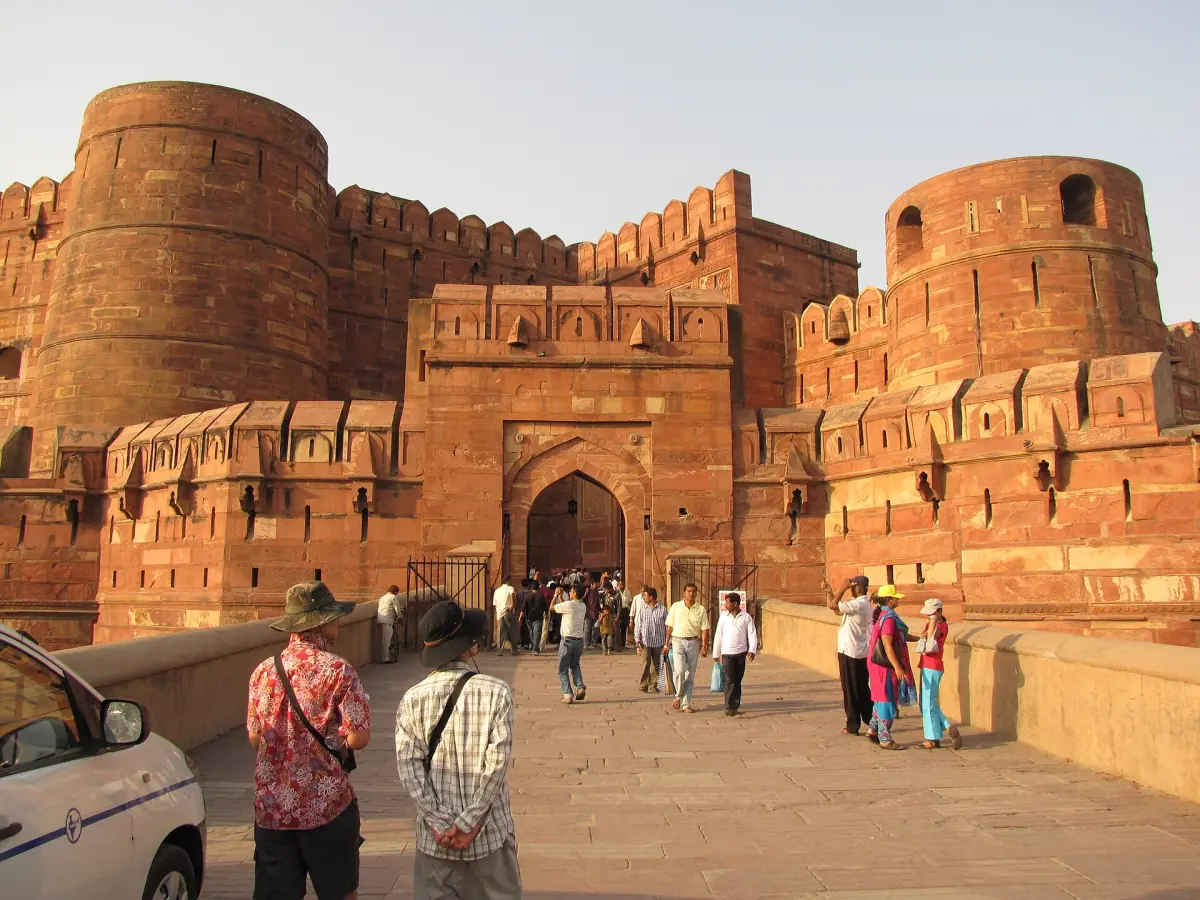
Agra Fort tickets
Entry fees, hours and the single visitor gate.
Rajasthan has its own Mughal-era fort story. If you continue to Jaipur, read about the history of Amber Fort.
Agra Fort history: frequently asked questions
Who built Agra Fort?
Akbar rebuilt an older stronghold called Badalgarh in red sandstone from 1565 to about 1573 or 1574. Shah Jahan later added white marble palaces and mosques.
Was Shah Jahan imprisoned in Agra Fort?
Yes. His son Aurangzeb held him in the fort until his death in 1666, about eight years. The Musamman Burj is the pavilion linked to that captivity.
Who held the fort after the Mughals?
The Jats and the Marathas held it in the 18th century. The British took it from the Marathas in 1803 and replaced many older buildings with barracks.
Is Agra Fort the same as the Red Fort in Delhi?
No. They are two different forts in two cities. The Red Fort Agra and Delhi page explains the difference. Both are called Lal Qila at times, so always name the city.
When was Agra Fort made a World Heritage Site?
UNESCO listed it in 1983. That is the year of the listing, not of any construction or restoration.
Is this the official Agra Fort website?
No. This is an independent travel guide. It is not the website of the Archaeological Survey of India, Uttar Pradesh Tourism or the Government of India, and it is not connected to any tour operator or hotel.