Inside Agra Fort: what to expect
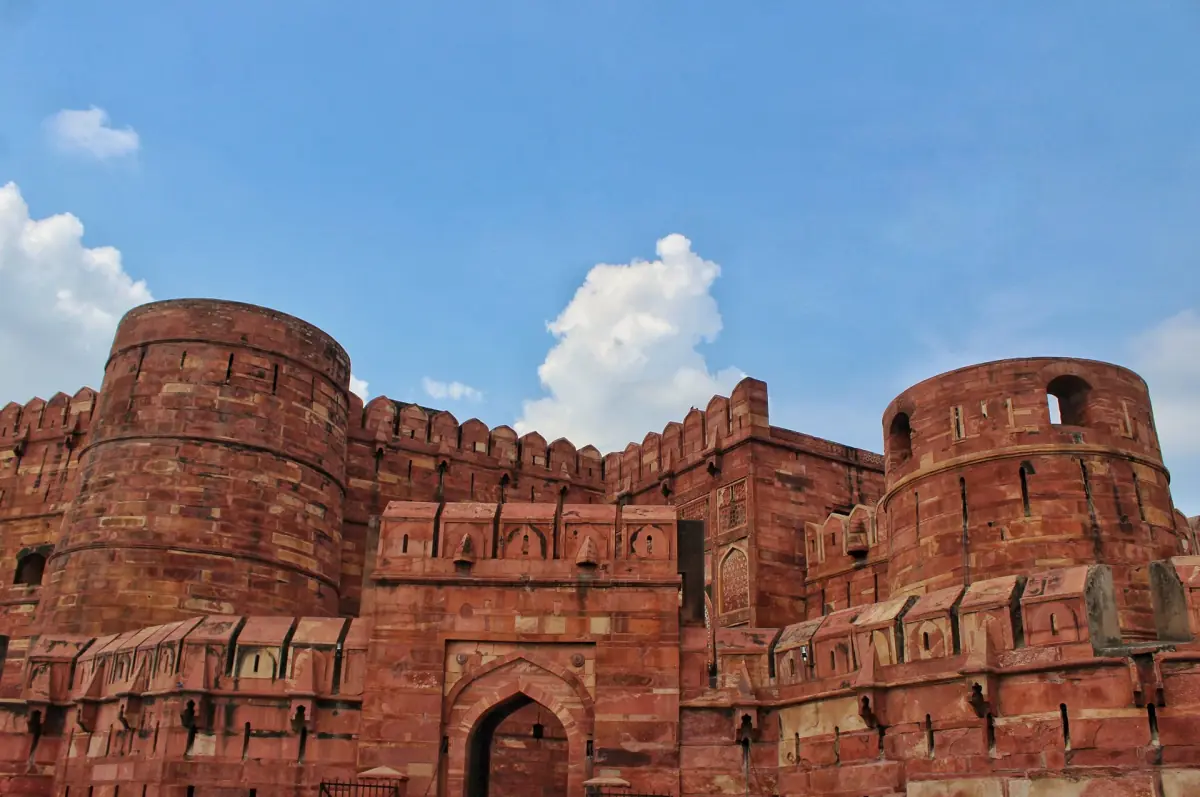
Inside Agra Fort you find palaces, audience halls, mosques and gardens within sandstone walls that UNESCO describes as an imperial city. You enter through one gate only, the Amar Singh Gate. A large part of the fort is still used by the military and is closed to visitors.
The fort is open from sunrise to sunset every day, including Fridays. That works out at roughly 06:00 to 18:00. Foreign visitors pay INR 650 on a regular day in 2026, and Indian citizens pay INR 50. The full price list is on the Agra Fort tickets page.
The buildings are described below by name, so you can match them to a plan or a guide. Knowing a building exists is not the same as knowing you can walk into it, so each section says what to check on the day.
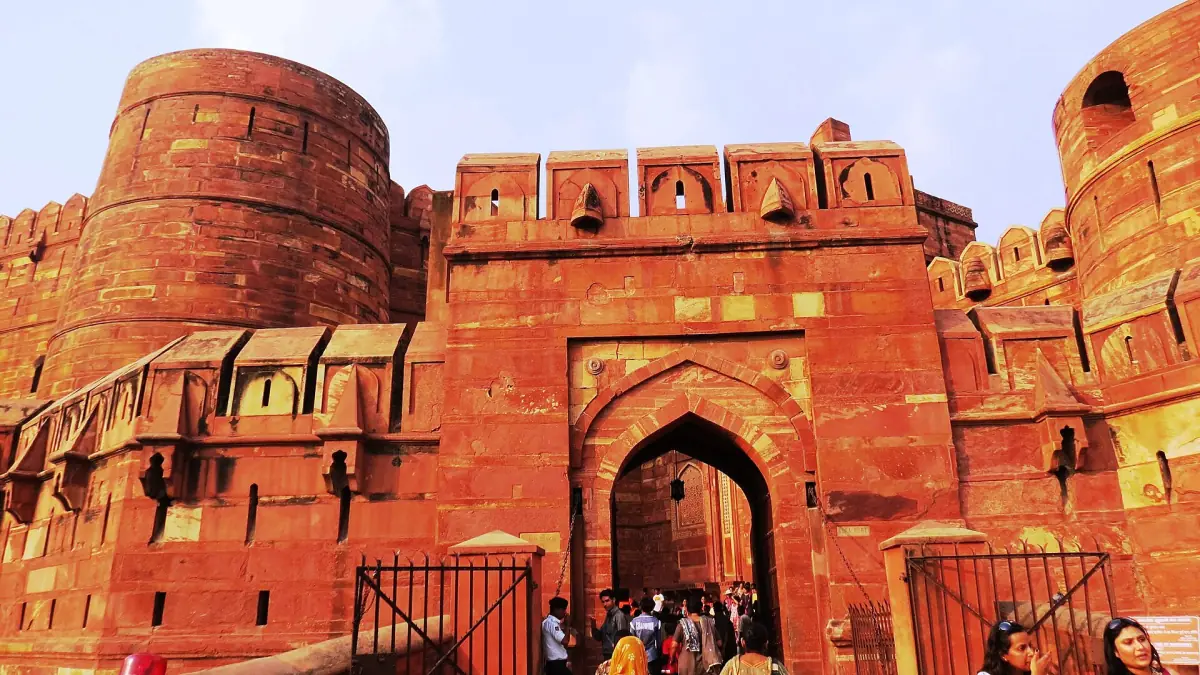
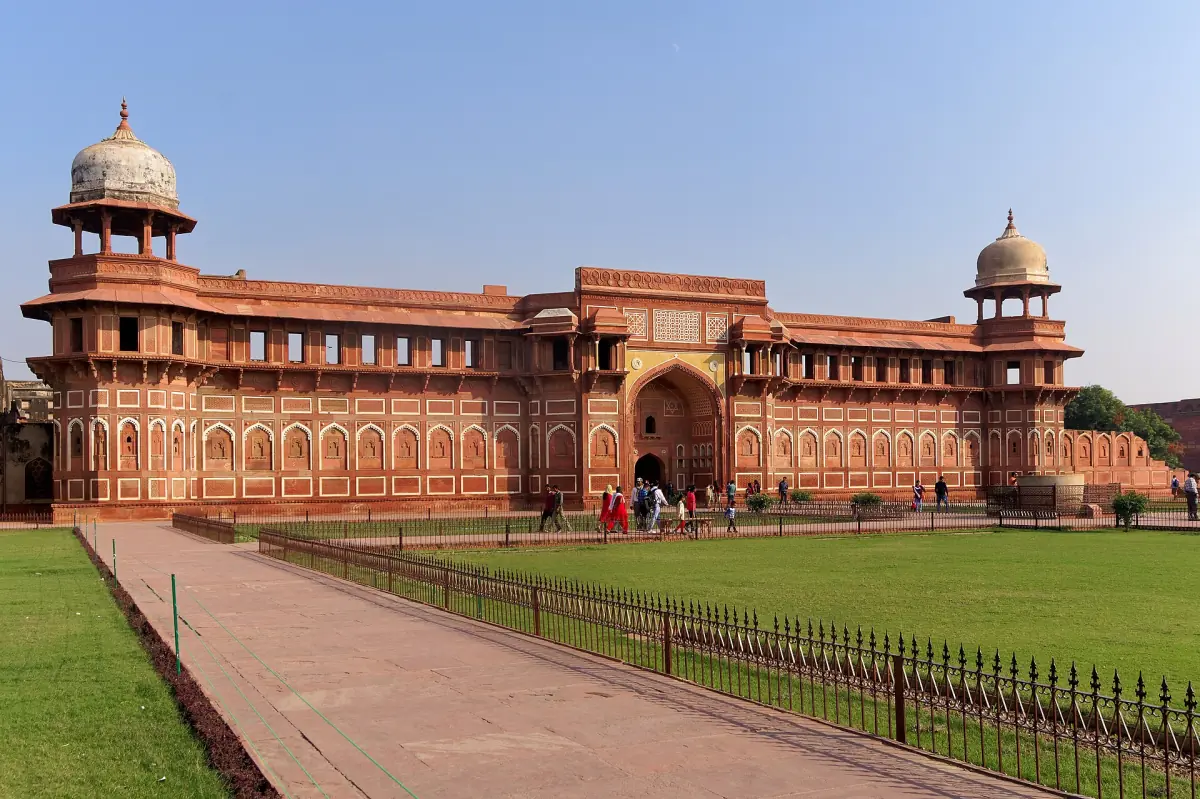
From the Amar Singh Gate to the palaces
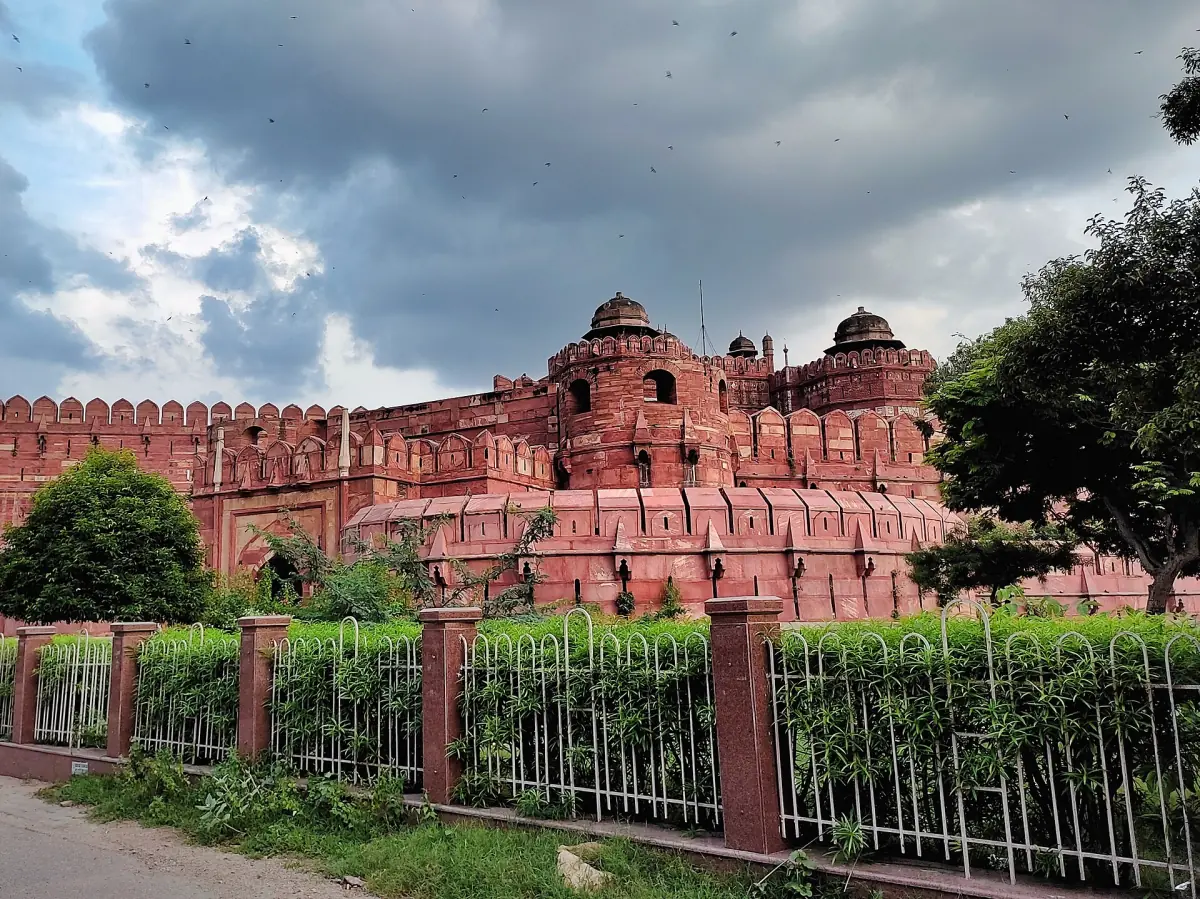
The Jahangiri Mahal is a long red sandstone palace with domed pavilions facing a lawn. It is attributed to Akbar, even though it carries Jahangir's name.
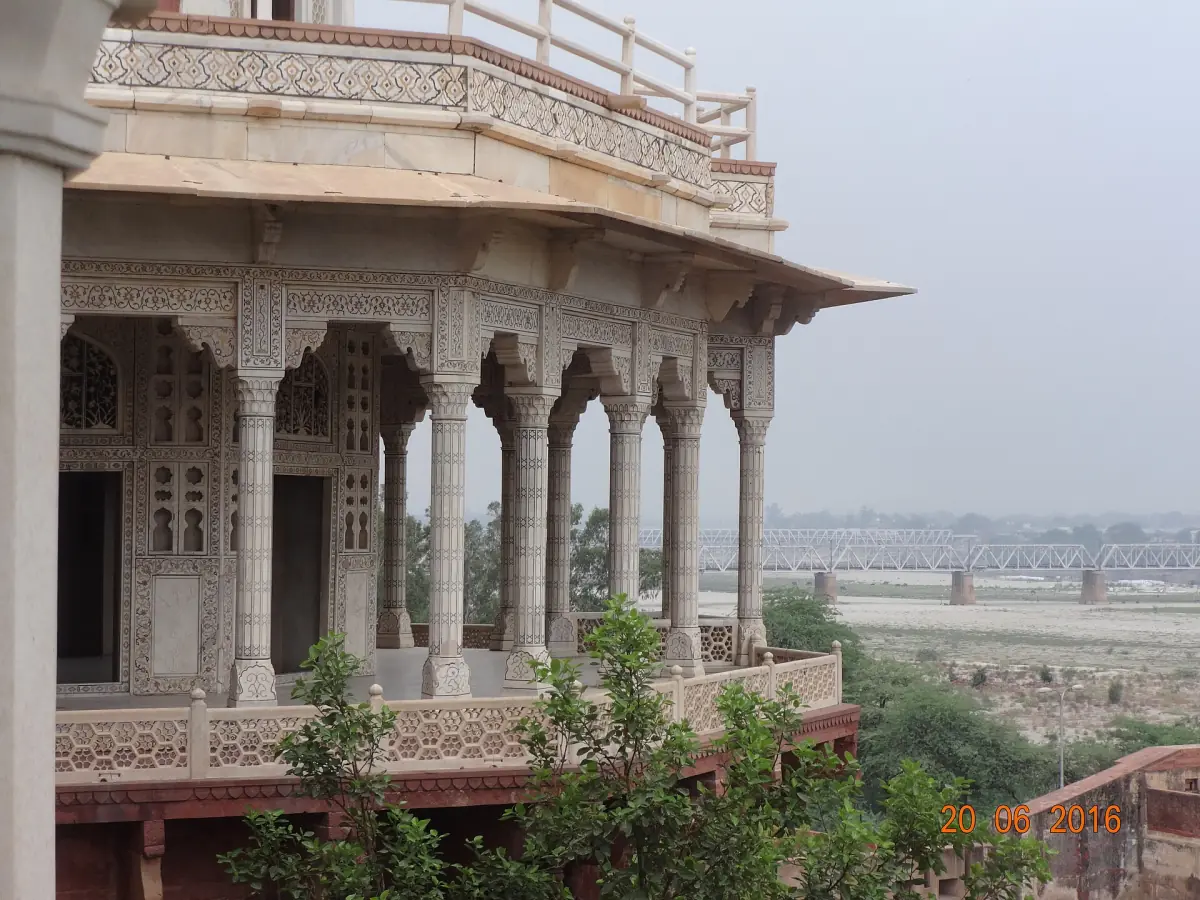
The Khas Mahal is a white marble palace. Rooms in a palace do not always open to visitors, so enjoy what the courts and terraces show and do not count on every room.
If you want help reading the buildings, a guide can link rooms to rulers. Compare current Agra Fort tours before you go.
Our pick: the fort with a guide
Two hours with a guide and the ticket already covered, a good way to make sense of the palaces and courts you walk through.
Hand-picked tours, booked through GetYourGuide. Prices are indicative starting prices in US dollars (as of October 2026). Tap a tour for live availability and the current price in your currency.
Agra Fort guided tours
Guided visits to the palaces, combined days with the Taj Mahal and day trips from Delhi, with live prices and availability.
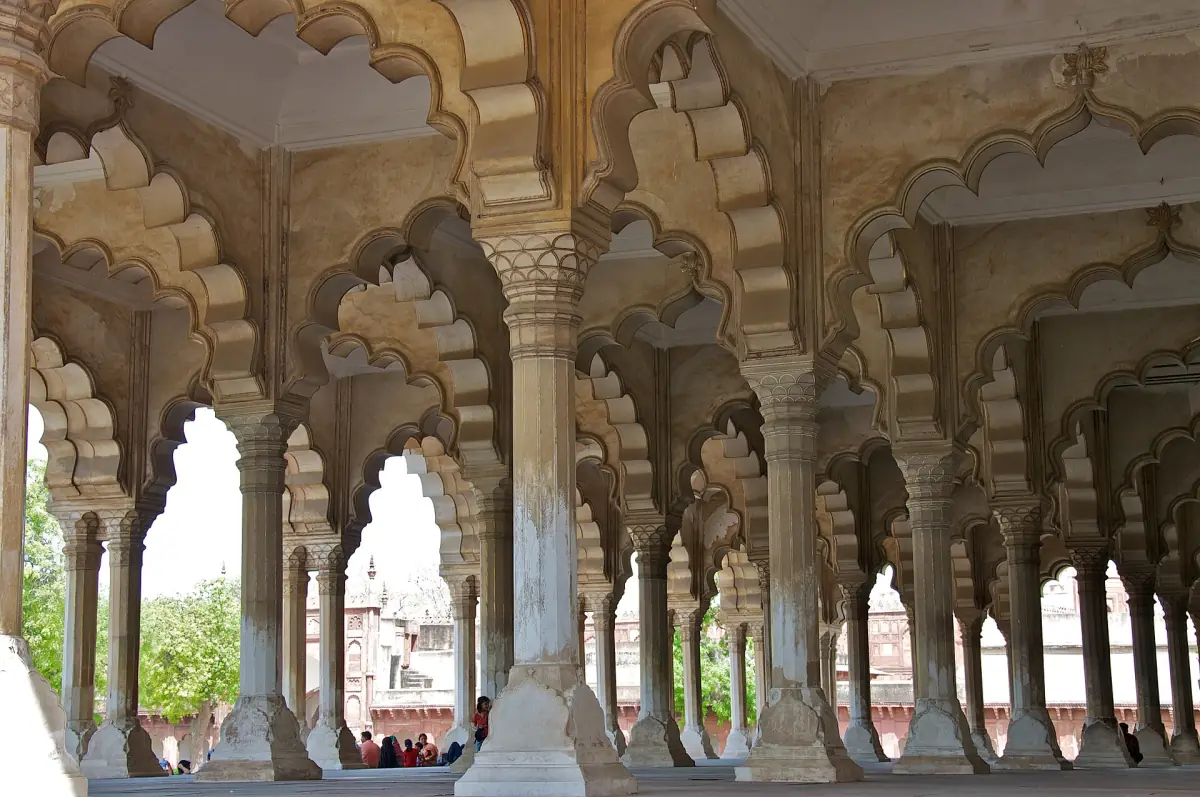
Diwan-i-Am: the hall of public audience
The Diwan-i-Am is the hall of public audience. It is credited to Shah Jahan and dated to 1628. The white columns stand behind a wide lawn and make it one of the easiest buildings to recognise. The cusped arches between the slender columns are the detail to look for.
Its counterpart is the Diwan-i-Khas, also written Diwan i Khas, the private audience hall. It is a white marble pavilion with arched openings on a stone terrace.
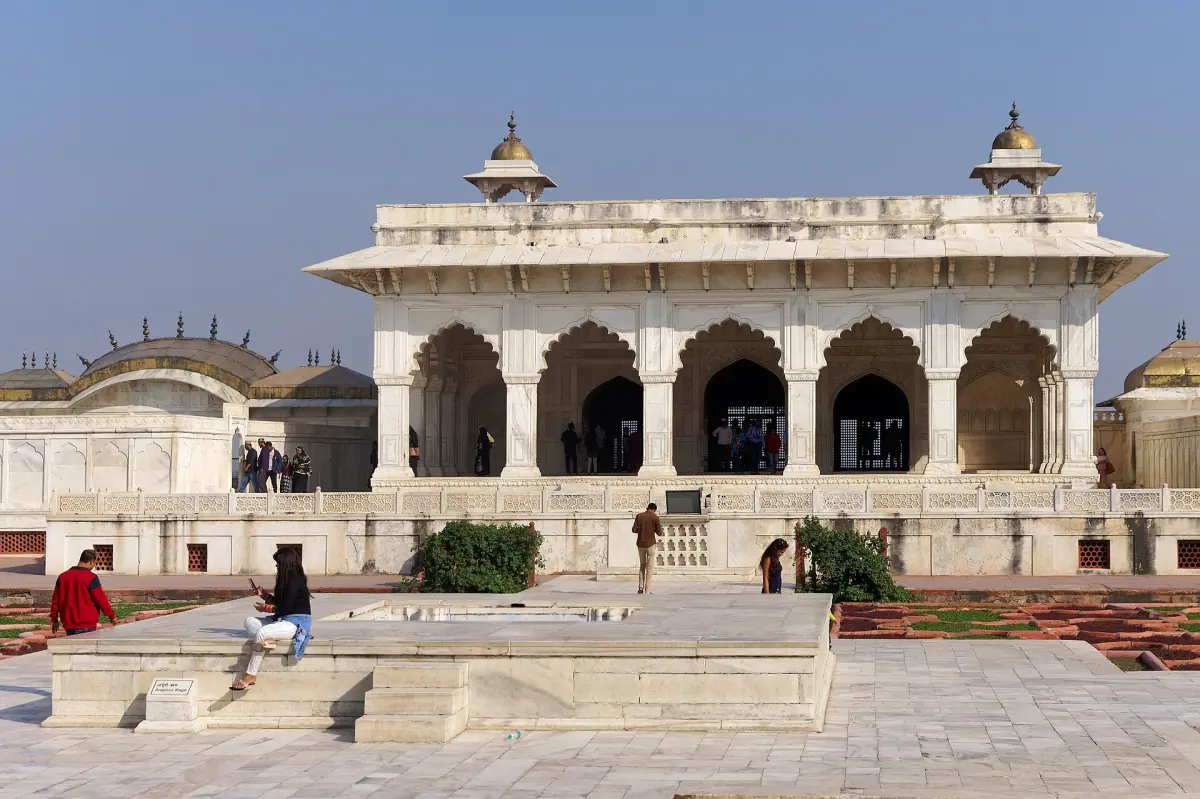
Diwan-i-Khas and the Khas Mahal
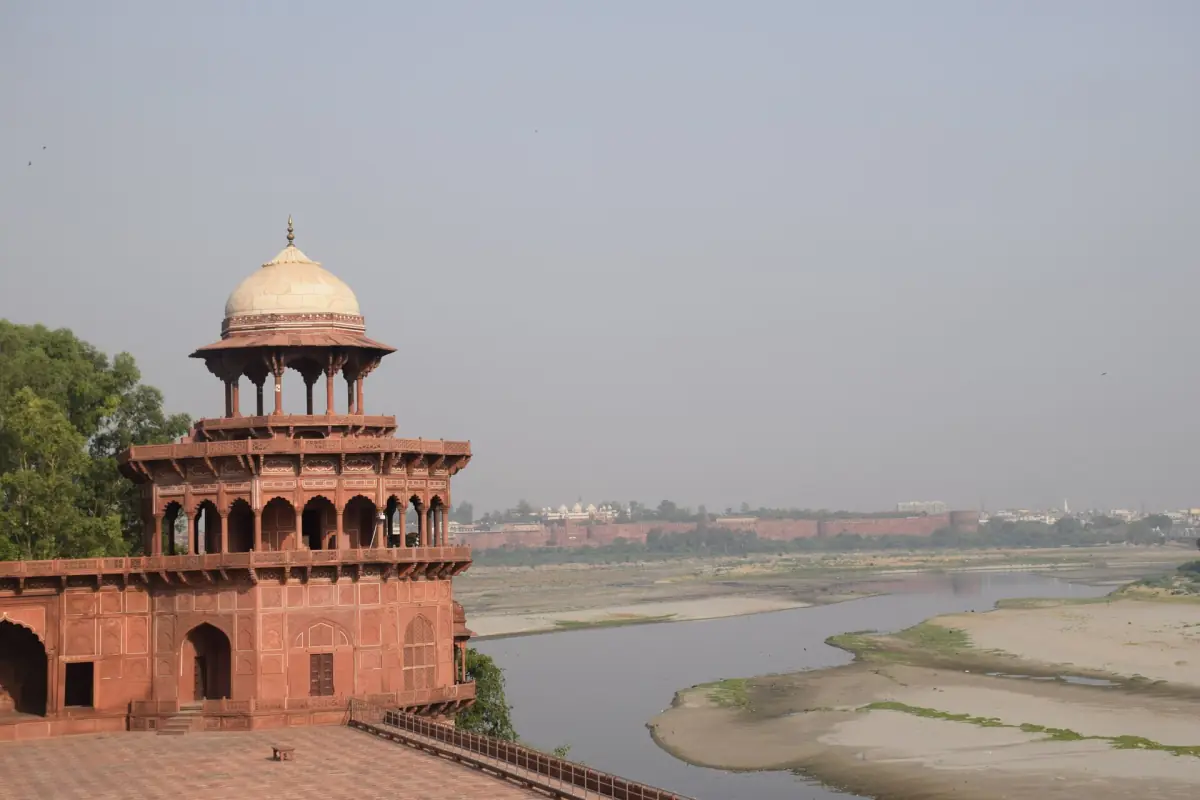
The Diwan-i-Khas and the Khas Mahal are both marble. The Khas Mahal is the white marble palace on the river side of the fort. The Musamman Burj, close behind it, is the marble pavilion linked to Shah Jahan's captivity. See the Musamman Burj page for the tower and the Taj Mahal view.
The exact set of rooms open in the Khas Mahal can change. Not every room is open, so treat the marble courts and terraces as the sure part of the visit.
Sheesh Mahal, Moti Masjid, Nagina Masjid and Machchi Bhawan
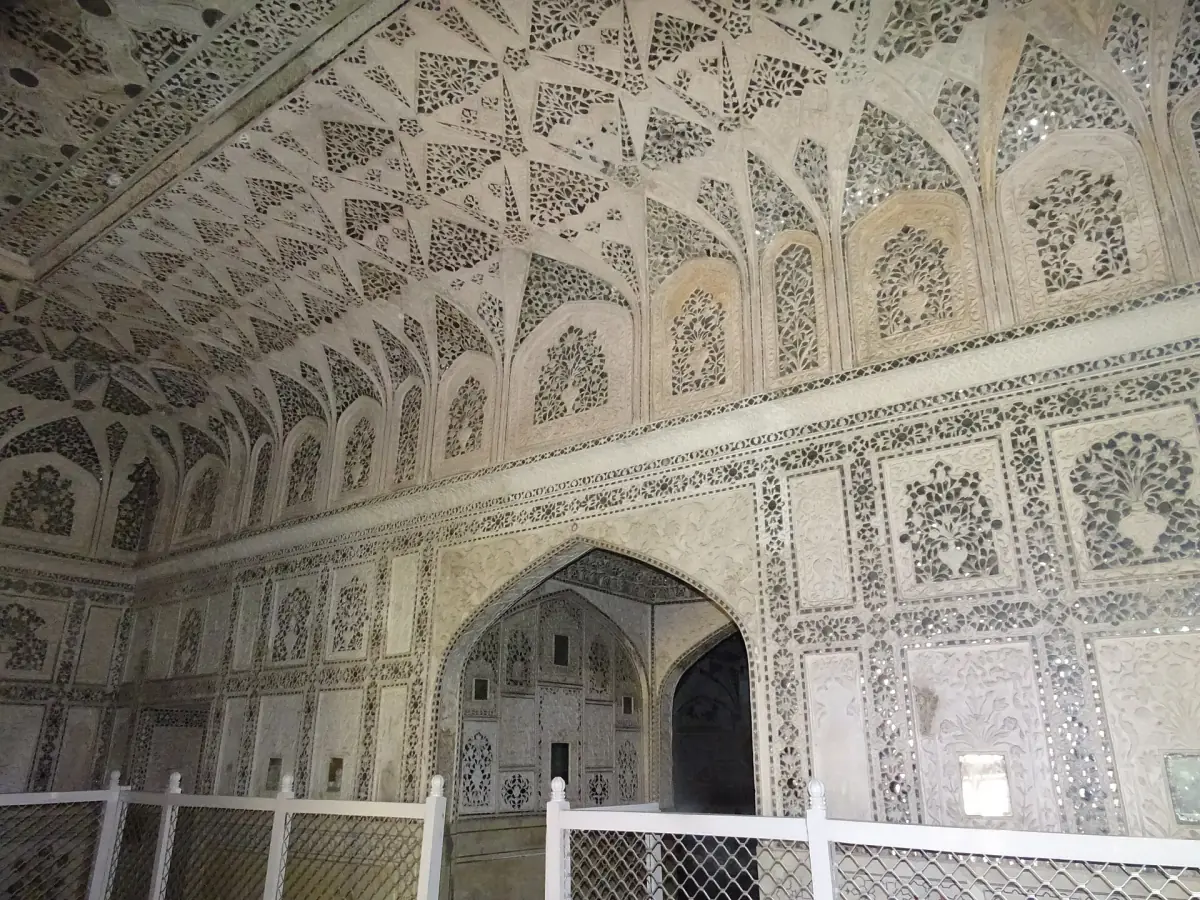
The fort also holds the Sheesh Mahal, the "mirror palace", whose ceiling and arched walls carry mirror mosaic. The Moti Masjid is a white marble mosque from Shah Jahan's time. The Nagina Masjid has three white marble domes. The Machchi Bhawan, also spelled Macchi Bhawan, is named in descriptions of the fort too.
All four exist as part of the fort. Whether you can step inside any of them on your day is a question for the entrance staff or the signs, so ask before you plan around them. The garden known as the Anguri Bagh belongs in the same "check on the day" group.
Agra Fort buildings at a glance
What each building is and how to plan for it.
| Building | What it is | How to plan |
|---|---|---|
| Jahangiri Mahal | Red sandstone palace, attributed to Akbar | See the facade and lawn |
| Diwan-i-Am | Hall of public audience, dated 1628 | The column hall and lawn |
| Diwan-i-Khas | Private audience hall in marble | Terrace and arches |
| Khas Mahal | White marble palace | Courts and terraces; rooms can vary |
| Sheesh Mahal | Mirror mosaic palace | Ask on the day before you plan to enter |
| Moti Masjid | White marble mosque | Ask on the day before you plan to enter |
| Nagina Masjid | Marble mosque with three domes | Ask on the day before you plan to enter |
| Machchi Bhawan | Named in descriptions of the fort | Ask on the day before you plan to enter |
For most visitors a visit built around the Jahangiri Mahal, the two audience halls and the Khas Mahal area is the most reliable plan. Treat the mosques and the Sheesh Mahal as a bonus when they are open.
What stays closed
The military part of the fort is not open to the public. Only the Amar Singh Gate is a visitor entrance. The Delhi Gate is part of the fort's story, not a public way in. The Akbari Gate and the Khizri Gate are also names in the history, not entrances you can use.
Do not assume you can walk the ramparts, the moat or the riverbank. Do not damage walls or surfaces. Ordinary photography is allowed. Tripods and extra lights need written permission.
Inside Agra Fort: frequently asked questions
Which buildings are inside Agra Fort?
The Jahangiri Mahal, Khas Mahal, Diwan-i-Am and Diwan-i-Khas are the main buildings to see. The Sheesh Mahal, Moti Masjid, Nagina Masjid and Machchi Bhawan are also part of the fort, but entry can vary.
Which gate do visitors use?
The Amar Singh Gate is the visitor entrance. The Delhi Gate is not a public entrance.
Can I visit the whole fort?
No. The military part is closed to the public. Plan around the palaces and halls that are open.
Who built the Jahangiri Mahal?
It is attributed to Akbar, even though the name points to Jahangir.
What is the Diwan-i-Khas?
It is the private audience hall, a white marble pavilion. The Diwan-i-Am next to it is the hall of public audience.
Is this the official Agra Fort website?
No. This is an independent travel guide. It is not the website of the Archaeological Survey of India, Uttar Pradesh Tourism or the Government of India, and it is not connected to any tour operator or hotel.